
Quick answer: if you buy a portable generator for hurricane season, buy one that shuts itself off when carbon monoxide builds up, run it at least 20 feet from the house, and put battery-backed CO alarms on every floor.
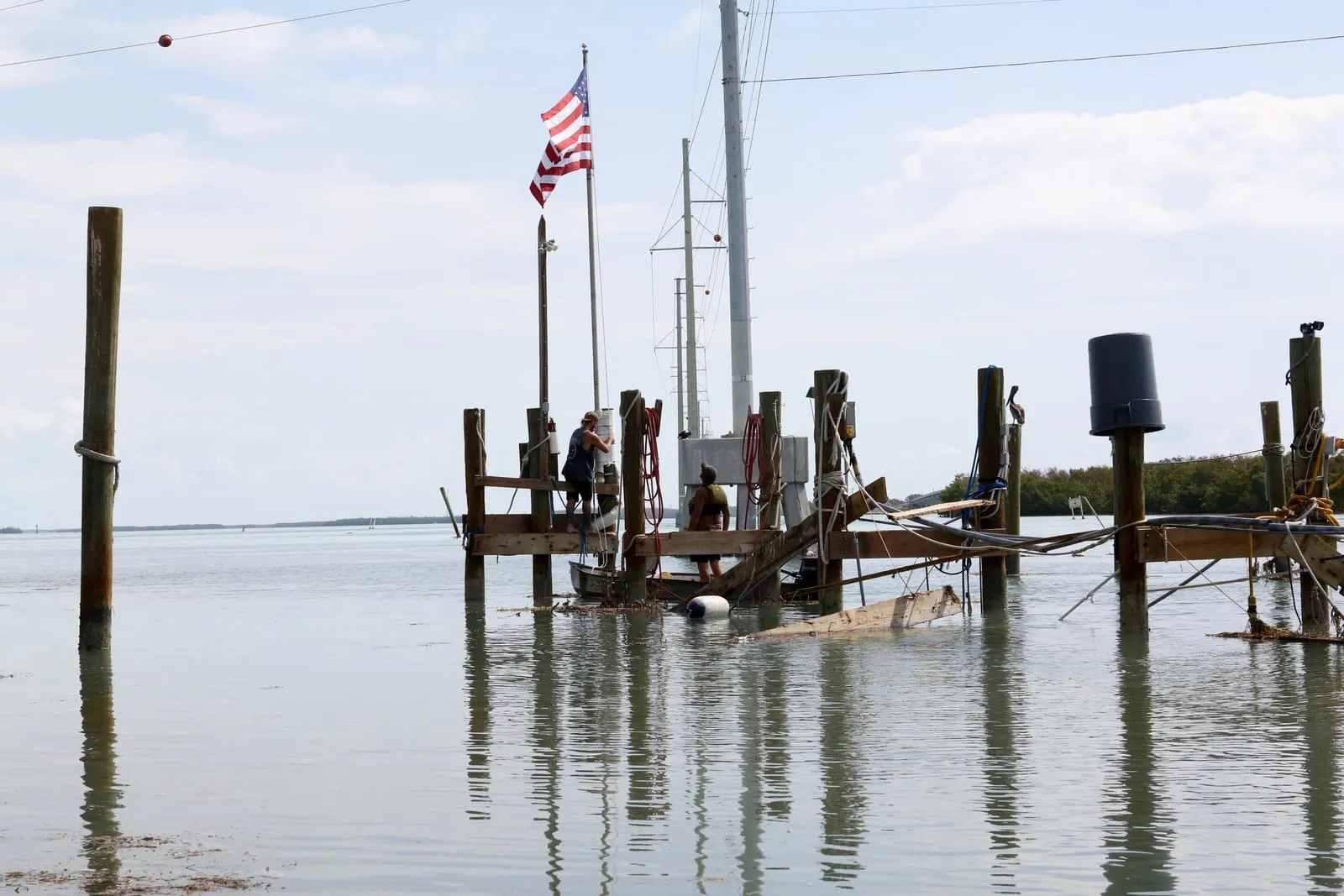
After a Florida hurricane, the danger doesn’t end when the wind stops. The National Hurricane Center’s report on Hurricane Irma (2017) lists carbon monoxide poisoning from generators among the main causes of Florida’s 80 indirect deaths [1]. Nationally, the CPSC says more than 100 people a year die from CO linked to portable generators [2], and its 2012 to 2022 study found that when a generator death followed a weather-related outage with a known cause, hurricanes and tropical storms accounted for 45 percent of those deaths [3].
At a glance
- Florida indirect deaths, Hurricane Irma
- 80, including CO from generators [1]
- U.S. generator CO deaths per year
- More than 100 [2]
- Generator CO deaths, 2012 to 2022
- 749 from generators alone [3]
- Share of weather-outage deaths from hurricanes
- 45% [3]
- Safe distance
- Outdoors, 20+ feet, exhaust away from the house [2]
How we chose
- Automatic CO shutoff built in. Where the maker states the standard it meets (ANSI/PGMA G300-2018), we say so; where it doesn’t, we say that too.
- Smaller inverter models, most of them light enough for one person to carry outside and away from the house.
- Recall check, model by model. Generac recalled several larger portable models in 2021, 2022 and 2026, including GP6500 and GP8000E units. We left all of those unit types off this page, even COsense versions whose exact model numbers weren’t listed [4].
Our picks
Best for: Fridge, fans and phones in a short outage
Champion 2500-Watt Inverter with CO Shield (201317)
Under 40 pounds, so it's easy to carry out past the 20-foot line, and Champion states its CO shutoff meets ANSI/PGMA G300-2018.
- 2,500 starting / 1,850 running watts on gasoline [5]
- CO Shield; meets ANSI/PGMA G300-2018, per Champion [5]
- Up to 11.5 hours at 1/4 load on 1.05 gallons [5]
- 53 dBA at 23 feet; 39.7 lb [5]
Safety check: CO Shield auto shutoff, ANSI/PGMA G300-2018 per Champion. No CPSC recall found for this model; a 2012 Champion recall covered different models (checked 2026-11-02).
Watch out: Champion says this unit is not recommended for emergency home backup; it's for small loads, not a house.
See it on Amazon → We chose it from specs and safety records; we haven't tested it ourselves.
Best for: Long outages when gas stations are closed
Champion 2500-Watt Dual Fuel Inverter with CO Shield (201323)
Runs on a 20-lb propane tank as well as gasoline, and Champion lists about 25 hours on one tank at 1/4 load.
- 2,500 starting watts; 1,850 running on gas, 1,665 on propane [6]
- CO Shield; meets ANSI/PGMA G300-2018 [6]
- About 25 hours on a 20-lb propane tank at 1/4 load [6]
- 53 dBA at 23 feet; 43.2 lb [6]
Safety check: CO Shield auto shutoff, ANSI/PGMA G300-2018 per Champion. No CPSC recall found for this model (checked 2026-11-02).
Watch out: Champion says CO Shield isn't a replacement for an indoor CO alarm. Output is lower on propane.
See it on Amazon → We chose it from specs and safety records; we haven't tested it ourselves.
Best for: A bit more running power in a small unit
Generac GP2500i Inverter with COsense (G0082512)
2,200 running watts, a little more than the Champion 2500s, with Generac's COsense carbon monoxide shutoff.
- 2,500 starting / 2,200 running watts [7]
- COsense CO shutoff [7]
- 1-gallon tank; 4.5 hours at 50% load [7]
- 48 lb; 3-year limited warranty [7]
Safety check: Generac's product page describes COsense but doesn't name the standard it meets. No CPSC recall found for the GP2500i (checked 2026-11-02).
Watch out: Shortest run time on this page: 4.5 hours at half load on its 1-gallon tank.
See it on Amazon → We chose it from specs and safety records; we haven't tested it ourselves.
Best for: Running a window AC unit or more circuits
Generac 3500i Inverter with COsense (G0077231)
3,000 running watts and a 30-amp twist-lock outlet, with a larger tank for nearly 9 hours at half load.
- 3,000 running watts [8]
- COsense CO shutoff [8]
- 2.6-gallon tank; 8.9 hours at 50% load [8]
- 30A twist-lock outlet; 109.1 lb [8]
Safety check: Generac's page describes COsense but doesn't name the standard. No CPSC recall found for this model (checked 2026-11-02).
Watch out: At 109 pounds it's hard for one person to move. Generac's page lists 0 starting watts, so ask for the real figure before sizing it.
See it on Amazon → We chose it from specs and safety records; we haven't tested it ourselves.
Buying guide
- Add up what you’ll run from the watt ratings on each appliance’s label, and compare it with the generator’s running watts.
- Plan where it will sit before the storm: outdoors, 20 feet or more from the house, exhaust pointed away, not near windows, doors or an attached garage [2][9].
- Install CO alarms with battery backup on every level and outside bedrooms [2].
- Read the CO shutoff section of the manual so you know what the warning lights mean before you need them.
Sources
- NOAA National Hurricane Center: Tropical Cyclone Report, Hurricane Irma (AL112017)
- U.S. Consumer Product Safety Commission: Carbon Monoxide Information Center
- U.S. Consumer Product Safety Commission: Fatal Incidents Associated with Non-Fire CO Poisoning from Engine-Driven Generators and Other Engine-Driven Tools, 2012 to 2022
- U.S. Consumer Product Safety Commission: Generac Power Systems Recalls Portable Generators (2026)
- Champion Power Equipment: 2500W Inverter (201317)
- Champion Power Equipment: 2500W Dual Fuel Inverter (201323)
- Generac: GP2500i Portable Inverter Generator with COsense
- Generac: 3500i Portable Inverter Generator with COsense
- Ready.gov: Power Outages
Common questions
How far from the house should a generator be?
At least 20 feet, outdoors only, with the exhaust pointed away from the home, per the CPSC. Ready.gov adds: away from windows, doors and attached garages.
Does a CO shutoff mean I can run a generator in the garage?
No. CO shutoff is a backup that turns the engine off when CO builds up; it doesn't make indoor use safe. The CPSC says never use a portable generator inside a home or garage, even with doors and windows open.
Do I still need CO alarms?
Yes. The CPSC recommends battery-operated CO alarms, or alarms with battery backup, on every level of the home and outside sleeping areas. Champion also says its CO Shield doesn't replace an indoor CO alarm.